It may be time to talk if
- Your child is newly nearsighted
- The prescription changes each ye
- Myopia runs in the family
- You want to understand treatment options
THE MYOPIA MANAGEMENT MAX PROGRAM
We follow the eye, not a favorite modality.
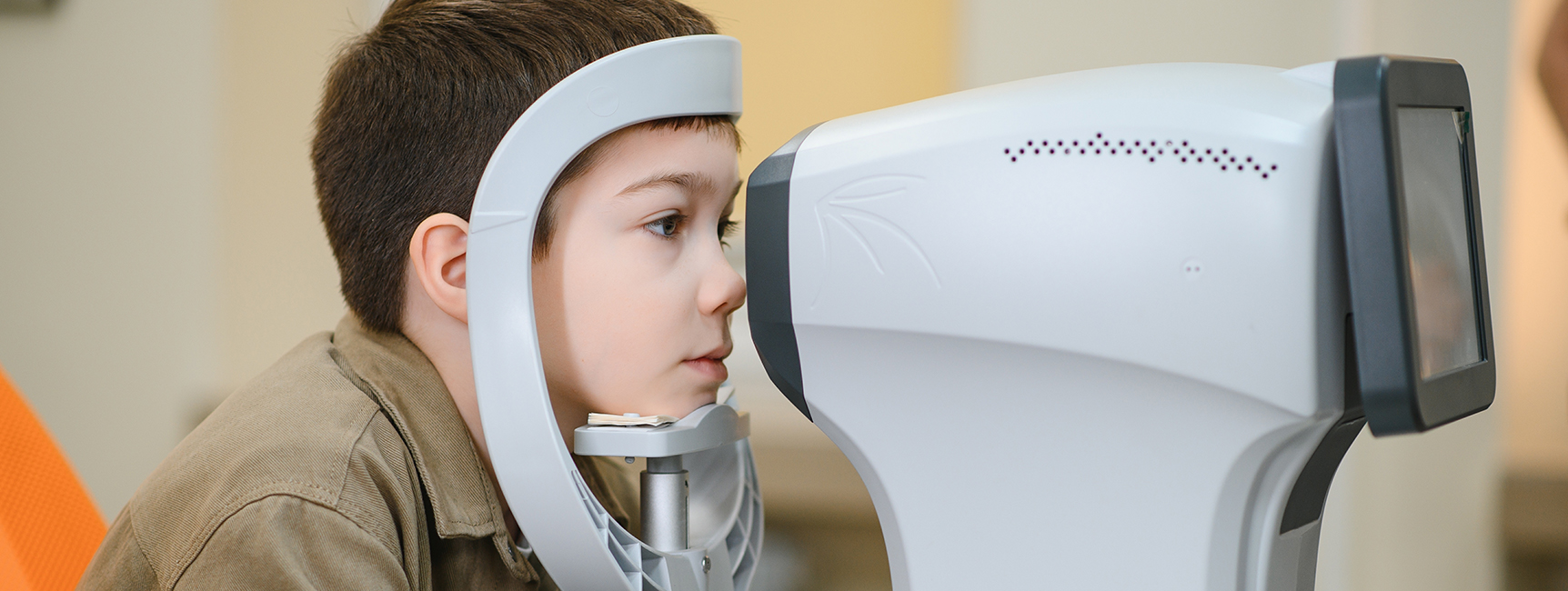
Myopia management aims to slow progression while keeping a child seeing well and living comfortably. We use axial length measurements to track eye growth, review prescription changes, and map the cornea when considering or monitoring orthokeratology. The MAX program is built to review efficacy at scheduled visits and reconsider the treatment when findings call for a change.
WHY MAX IS DIFFERENT
One program. Several ways to respond.
MAX is structured around the clinical goal of slowing progression. The approach may evolve rather than being tied to the first treatment selected.
01
Choose the right starting point
Ortho-K, daytime myopia-control lenses, low-dose atropine, or a combination may be considered based on the child’s eyes and family routine.
02
Show the trend
Axial length and topography baselines, progression reports, and prescription changes help us explain what we are seeing.
03
Reassess and adjust
Myopia-specific follow-ups review treatment response. When appropriate, the doctor may refine, switch, or combine modalities.
OUR PROCESS
A closer look, step by step.
01
Establish a baseline
We review prescription history, family history, lifestyle, eye health, and axial length.
02
Choose together
We discuss the child’s age, readiness, goals, and the advantages and demands of each suitable option.
03
Measure and adapt
At follow-up, we compare eye growth and vision changes and adjust the approach when appropriate.
OPTIONS, NOT A ONE-SIZE-FITS-ALL ANSWER
The modality serves the goal.
No treatment stops progression for every child. We recommend an option based on the child and track whether it is meeting the intended goal.
Orthokeratology
Overnight lenses are designed using corneal mapping, with careful fitting and ongoing monitoring.
Myopia-control soft lenses
Daily disposable options such as MiSight may suit some children and families.
Low-dose atropine
Nightly drops may be an option depending on the child’s age, progression, and clinical picture.
Other suitable options
We discuss appropriate spectacle designs and lifestyle habits when they fit the child’s needs.
YOUR NEXT STEP
Leave with a clearer plan.
You will understand your child’s baseline, the reason for the starting plan, the follow-up schedule, and the measurements we will use to judge progress. Slowing progression is the goal; individual results vary.
Request an appointmentCOMMON QUESTIONS
Good questions deserve clear answers.
Does myopia control guarantee the prescription will stop changing?
No. The aim is to slow progression. Individual response varies, which is why we measure and review it over time.
Why measure axial length?
It measures the eye’s growth directly and adds useful context alongside the glasses prescription.
Is Ortho-K the best choice for every child?
No. Corneal shape, family routine, hygiene readiness, vision goals, and treatment response all matter.
When should we ask about myopia management?
A conversation can be useful when a child first becomes nearsighted or the prescription is changing. We review the history and measurements before recommending a plan.
How often will my child need follow-up?
The schedule depends on the treatment and what the measurements show. We explain the monitoring plan when you choose an option together.

Contact Info
Office hours
- Monday 9:00 am - 5:00 pm
- Tuesday 9:00 am - 5:00 pm
- Wednesday 9:00 am - 5:00 pm
- Thursday 9:00 am - 1:30 pm
- Friday 8:30 am - 4:00 pm
- Saturday Closed
- Sunday Closed
Optical hours
- Monday 9:00 am - 5:00 pm
- Tuesday 9:00 am - 6:00 pm
- Wednesday 9:00 am - 5:00 pm
- Thursday 9:00 am - 2:00 pm
- Friday 8:30 am - 4:30 pm
- Saturday Closed
- Sunday Closed
© 2026 All EyeCare Optometry. All rights Reserved. Accessibility Statement - Privacy Policy - Sitemap
Powered by:
